IN
IN₹
Apparel & Fashion
Loading subcategories...
View More
Description
The Eppendorf Research pipette represents a premium multi-channel pipetting solution designed for laboratories that demand exceptional precision and streamlined operational workflo...
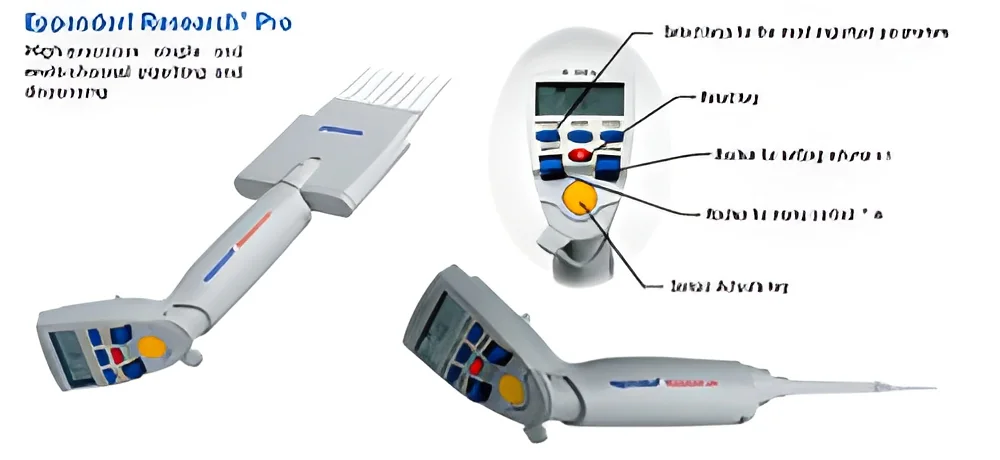
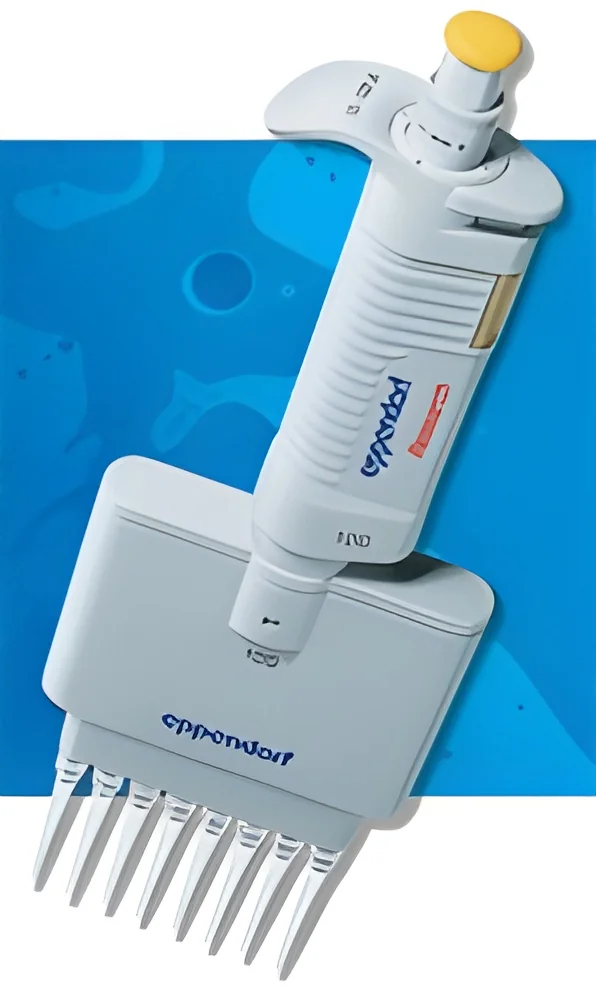
The Eppendorf Research pipette represents a premium multi-channel pipetting solution designed for laboratories that demand exceptional precision and streamlined operational workflows. Available in versatile 8-channel and 12-channel configurations, it allows for efficient processing of standard 96-well and 384-well microplates. A standout feature is the quick-change lower part system, enabling users to switch between channels or perform maintenance with a simple flick of the wrist, ensuring minimal downtime. The pipette incorporates a specially engineered nose cone with an O-ring seal, which guarantees secure tip attachment and smooth, effortless ejection with minimal force application. This thoughtful design significantly reduces user fatigue during extended use and increases overall throughput, making it the ideal instrument for repetitive series dispensing tasks central to molecular biology and immunology applications. Its robust construction and ergonomic form factor cater to professionals who prioritize reliability, performance consistency, and long-term durability in their critical laboratory equipment.

This pipette finds extensive application across industries where accuracy, reproducibility, and high sample throughput are fundamental requirements. Within pharmaceutical and biotechnology companies, it is indispensable for high-throughput screening (HTS), assay development, and compound management. Diagnostic and clinical laboratories depend on its consistency for precise reagent handling in vital tests like ELISA, chemiluminescence immunoassays (CLIA), and other automated diagnostic platforms. Academic and government research institutions utilize it for a wide array of molecular biology techniques, including PCR setup, next-generation sequencing library preparation, and genomic analysis. Furthermore, it is valuable in quality control (QC) laboratories and contract research organizations (CROs) for processing large batches of samples reliably, ensuring data integrity and timely result delivery. Its design is particularly suited for environments that enforce strict sterility protocols and require instruments that promote both precision and user-friendly operation.

The Eppendorf Research pipette delivers substantial value by enhancing laboratory productivity, ensuring result consistency, and reducing long-term operational costs. Its proven reliability minimizes pipetting errors and the need for sample re-runs, safeguarding valuable reagents and research time while upholding stringent quality standards. For procurement specialists, importers, and distributors, this product represents the trusted Eppendorf brand, synonymous with quality in the global life sciences market, which fosters strong customer trust and facilitates repeat business. The instrument's durable construction, coupled with straightforward maintenance, translates into extended service life and dependable performance, offering an excellent return on investment. It is a strategic asset for laboratories aiming to scale their operations efficiently, supporting workflows that require robust, accurate, and user-centric equipment to achieve their scientific and operational goals.

Key Features:
- Available in 8-channel and 12-channel configurations for efficient multi-well plate processing.
- Quick-change lower part system for rapid adaptation and easy maintenance.
- Specially designed nose cone with integrated O-ring seal for secure, low-force tip attachment and ejection.
- Engineered specifically for precise series dispensing in molecular biology and immunology assays.
- Ergonomic design and lightweight construction to reduce user fatigue during prolonged use.

Benefits:
- Increases laboratory throughput and efficiency by enabling simultaneous multi-channel pipetting.
- Reduces operational downtime with the quick-change system for fast configuration swaps.
- Enhures consistent, accurate results by minimizing tip attachment errors and user variability.
- Improves user comfort and reduces the risk of repetitive strain injuries with its ergonomic design.
- Provides long-term reliability and durability, ensuring a lower total cost of ownership over the instrument's lifespan.
Specifications
| Additional Information | |
|---|---|
| Country of Origin | India |
| Customisable | No |
Application
The Eppendorf Research 8 and 12-channel pipette is engineered for high-throughput laboratory environments where precision and efficiency are critical. Its multi-channel design enables simultaneous processing of multiple wells in standard microplates, dramatically reducing manual pipetting time and minimizing potential for human error during repetitive tasks. This makes it an essential tool for technicians and researchers who require consistent, reliable performance in demanding daily workflows.

Specifically designed for molecular biology and immunology applications, this pipette excels in series dispensing operations such as reagent addition, plate washing, and assay stopping procedures. The innovative nose cone with an integrated O-ring seal ensures secure tip attachment with minimal force, enhancing user comfort and speeding up operations. It is perfectly suited for settings where sterility and accuracy are non-negotiable, including diagnostic laboratories, pharmaceutical R&D facilities, and academic research institutions.
- High-throughput PCR master mix and reagent dispensing for molecular biology workflows.
- Simultaneous multi-well plate washing steps in ELISA and other immunoassay protocols.
- Efficient application of primary and secondary antibodies across numerous samples in immunology studies.
- Series dispensing of cell culture media, buffers, and reagents in biotechnology processes.
- Rapid and accurate addition of stopping reagents in enzymatic kinetic assays and development phases.
Trade Details
| Available Stock | In Stock |
| Sample Availability | No |
Payment Terms
| Payment Terms |
|
Company Profile
Bio Globus, New Delhi
 New Delhi, India
New Delhi, IndiaRaw Materials & Chemicals•Distributor / WholesalerImporter / Exporter
Factory Details
Factory SizeBelow 1000 sqm
Annual Production Capacity0
Eppendorf Research 8 12 Channel Pipette For Molecular Biology Immunology
Eppendorf Research 8 and 12-channel pipettes deliver precise, high-throughput series dispensing for molecular biology and immunology labs, featuring quick-change lower parts and O-ring sealed nose cones for reliable, effortless tip handling.
Min. Order Quantity: 1 units
Shipping
Shipping fee and delivery date to be negotiated. Contact supplier now for more details.
Bio Globus New Delhi, India
New Delhi, IndiaRaw Materials & ChemicalsDistributor / Wholesaler